
On Being a Generalist: repost from 13 December 2010

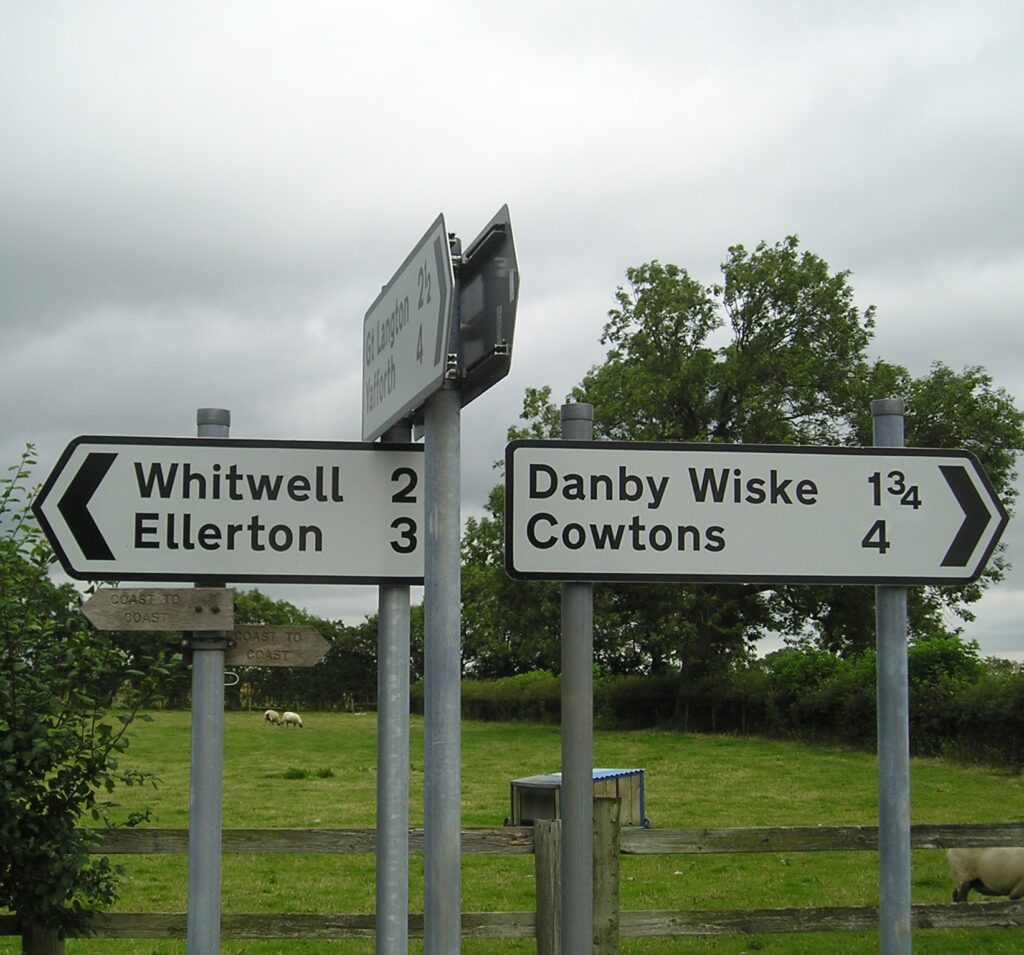
Photo taken 22 July 2008 on the Coast-to-Coast Walk across England with an Olympus Digital Camera.

My adult son asked me the other day, “Mom, exactly what do you do?”  I answered with a paragraph.  My husband told me I needed an elevator speech to explain what I do.  I have always had a problem with this.  I am a generalist.  I know a little bit about a lot of things.  I have built my life and my life’s work on a foundation of curiosity.  Being raised by a teacher and traveling a lot from a very young age probably helped.  Someone else said it best:    

    The cure for boredom is curiosity. There is no cure for curiosity. 

-Dorothy Parker

So when my nursing school classmates were choosing specialities in our final semester, I chose gerontology–it’s a generalist specialty.  Like pediatrics, you need to know everything about what can happen and the limits are the age group (in geriatrics, it’s less about age and more about function).  I did not choose an organ or body system.  I was speaking with one of my colleagues recently who is a diabetes nurse educator who now has specialized to such a degree that she only works with people who use insulin pumps.  She loves it!  She can know nearly everything there is to know about this unique area of practice. That must be very satisfying.  In working with older adults, I need to know about diabetes and hearts and minds and families and personal values and ethics and legal issues and end-of-life care and working on an interdisciplinary team and healthcare financing and what really matters to an older adult…the list goes on and on.  That is very satisfying as well.

Because I also work in quality improvement (QI), I’m a generalist twice over.  QI is a discipline that can be applied to any endeavor.  I’ve used it professionally in health care and in my personal life (What am I trying to accomplish? How would I know that I got there? What can I try?)  

I’ve rarely met a project I didn’t like. I’m curious: How can what I know be used in this situation?  Could I be of service?  What new knowledge and relationships will enrich my life and practice by being involved?  There is a caution here:  being too enamored of new activities can lead to a frenetic pace and a lack of attention or competency in any of the endeavors.  The trick is to stay current as a generalist, and not too scattered, unfocused or shallow as to not be relevant or useful.  I love to cruise ideas and in the current connected climate, it’s never been so easy.  Twitter, blogs, networks…they all appeal to me. Knowing what to pay attention to and what to ignore is part luck and part intuition.  

I found a document  about “Creative Generalism” that I find intriguing (remembering that I find many things intriguing).  According to this document, creative generalists excel in five areas:

  • Wander & Wonder: finding possibility
  • Synthesize and Summarize: presenting information
  • Link and Leap: generating ideas
  • Mand Match: connecting people
  • Experience and Empathize: understanding worldview

This seems to fit what I do.  I am a gerontological nurse practitioner working to improve relationships in health care through system redesign and skill building.  That’s the elevator speech! (I’ll have to work on the jargon later.)   I’m enjoying my generalist journey and maybe my son has a new way to explain what his mother does.
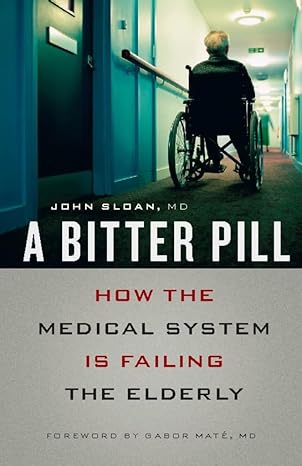

Book Review: A Bitter Pill: How the medical system is failing the elderly by John Sloan, MD (2009, Greystone Press) repost from 29 March 2010.


John Sloan writes, “The way modern medical care is usually practiced is all wrong for old people near the end of their lives” and he sets out in his book to describe exactly who these people are that are not benefiting (and indeed being harmed) by current medical practice, why that is so, and what can be done about it. He builds his case using anecdotes from practice, references to research, and analysis of the mismatch between what is considered best practice and what makes sense for frail people. The book opens describing exactly who this book is talking about: the fragile elderly.  This state is defined by the person or a caregiver as the time when the emphasis from prevention and rescue changes to different priorities. These priorities are described with other the characteristics of the fragile elderly by Dr. Sloan:

  1. They have multiple problems (diseases, poorly functioning organs, etc.)
  2. They are dependent in doing their activities of daily living (bathing is usually the first to go)
  3. Daily function is their #1 priority
  4. A crisis is a crisis of function: you don’t end up in the hospital because of pneumonia, you end up there because it made you confused and unable to manage your day
  5. Comfort is an overriding priority
  6. Fragile elderly are different from each other
  7. Response to medications is unpredictable 
  8. Illnesses don’t look like they do in a textbook.  
  9. They are near the end of their lives.

Methodically Dr Sloan builds his case, telling stories and citing studies to describe how we got to a “prevent and rescue” system (well-designed for the average, healthy or 1-diagnosis patient), how hospital care can be downright dangerous for older people (another symptom, another specialist working up something that won’t change function or quality of life and has been known for years), and sadly, what happens when we don’t give fragile elderly what they really need. And what is that? You have to ask and then LISTEN!  I found myself nodding in agreement throughout this book, particularly when Dr Sloan describes how many medications he safely discontinues, performing the geriatric specialist procedure: the drugectomy.  I was often reminded of what the gerontologist Bernice Neugarten suggested: Older people become more like themselves as they age.  

When I speak to professionals about guidelines, I remind them that NONE of the science behind the guidelines was conducted on a frail elderly population. As Dr Sloan says, you are in an evidence-free zone when working with fragile elderly.  This makes informed decision-making incredibly important. What are the patient’s goals? Will any treatment, test or procedure help to meet those goals without causing harm?  Another important thing to remember about guidelines is that reliability in regards to guidelines means to reliably consider the guideline, not universally apply it.  Does this guideline fit this situation? Does it fit this patient?  With the frail elderly, the answer is generally no to both.  

When Dr Sloan addresses the fixes, he’s in familiar territory for those of us who have been working in system redesign and quality improvement in the last decade: collaboration with patients and caregivers, supporting patient and caregiver decisions, supporting people at home as long as it is desired and possible (with important distinctions about what it means to live at risk), avoiding unnecessary hospitalizations, planning for crises, supporting family caregiving (and he references a favorite children’s book in our family “Love You Forever” by Munsch), focusing care on comfort and function, providing more care at home (including medical care), considering every prescription a drug trial, advance care planning, and a focus on the relationship between professional and patient. For most people, this is the relationship with their primary care provider.

I stopped marking pages to remember in this book; it was almost every page.  I heartily recommend “A Bitter Pill” to health care professionals and those who are caring for an elderly relative. 

2026 Note: Sadly, not much has changed! May you all be strong advocates for yourselves and your loved ones!

The benefits of taking a break

Sunrise at Kilauea Crater, Hawaii Volcanoes National Park, photo by Connie Davis

I’m returning from a wonderful trip to the Big Island, and I’m privileged to have that opportunity. I’m reflecting on the benefits of a break.

According to the Harvard Business Review, vacations benefit “mind, body, and soul.” The potential benefits include an uncluttered mind, improved creativity, and enhanced mood. A reduction in circulating stress hormones allows the immune system to recover and can reduce your blood pressure. And if you are in your “happy place,” you may have the opportunity to reconnect with who you truly are and what matters to you.

The vacation was an opportunity to reflect on the beauty of the world around me and on serendipity. When our rental car was unexpectedly available at midnight, we added a middle-of-the-night visit to Kilauea Crater to our agenda and saw glowing lava and a beautiful sunrise. When our rental car’s “Check Engine” light came on during our first day, our budget rental was replaced with a brand-new 11-miles-on-the-odometer SUV, perfect for our seven nights of beach camping. When a storm caused the Hawaii County officials to close their parks to overnight campers, we were able to find a sweet, inexpensive hotel room in a family-owned operation one block from a beach where turquoise blue waves crashed into the rocky shore. As an added bonus, whales cavorted offshore. When another camper couldn’t finish his last papaya before boarding his flight, we received an unexpected treat of the delectable fruit. We were among the less than one thousand people who will visit a protected national wildlife reserve in 2025. Our trip did end with a return to our own vehicle at 11:45 PM, buried under 6 inches of snow with a dead battery. Luckily we were prepared with a Battery Jump Starter and it started right away. (Seriously, if you don’t have a Battery Jump Starter, add it to your wish list!)

Our travel experiences remind me that I need to accept my family history research journey with the same attitude of wonder and the ability to change strategies as needed. I’m easing my way back into my genetic genealogy projects with renewed energy and hope.